Children and a teacher in the kindergarten garden and playground

Ages 4 – 6

Kindergarten

Join our adventure — where every child's school journey begins, in a warm and joyful environment built on play.

Join our adventure

The years that matter most

Optimum brain development happens between birth and six, so these early foundations shape everything that follows. Children can join us at any time of the year, in any year group, into intentionally small classes where every child is carefully known and gently challenged.
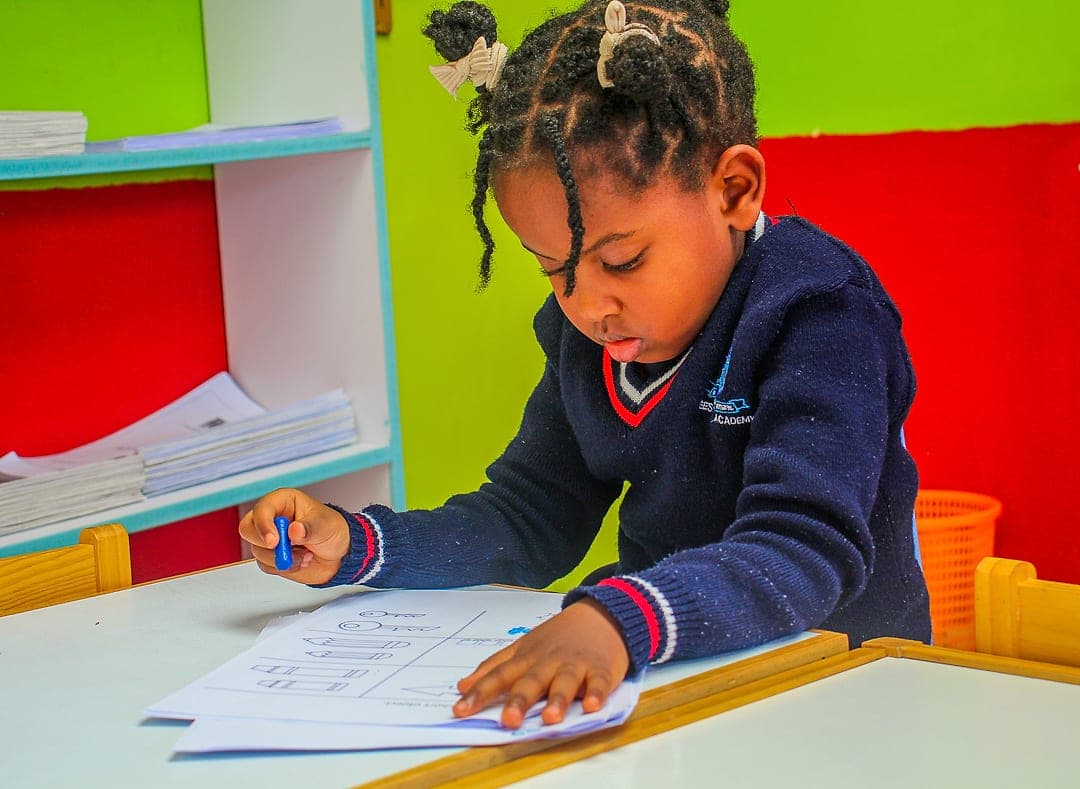
A child concentrating on a writing exercise at their desk

Ages 4 – 5

KG1 / PP1

In KG1, children work confidently toward the Early Years Foundation Stage (EYFS) goals through purposeful play, exploration, and guided learning — building strong foundations in early reading, writing, communication, and numeracy.

We teach reading using Systematic Synthetic Phonics: children first learn the 42 sounds of English, then blend them to read their first words. Specialist teaching begins too — in CRE, digital learning, STEM, music, and drama.

Areas of learning

  • Personal, social & emotional
  • Communication & language
  • Physical development
  • Literacy
  • Mathematics
  • Understanding the world
  • Expressive arts & design
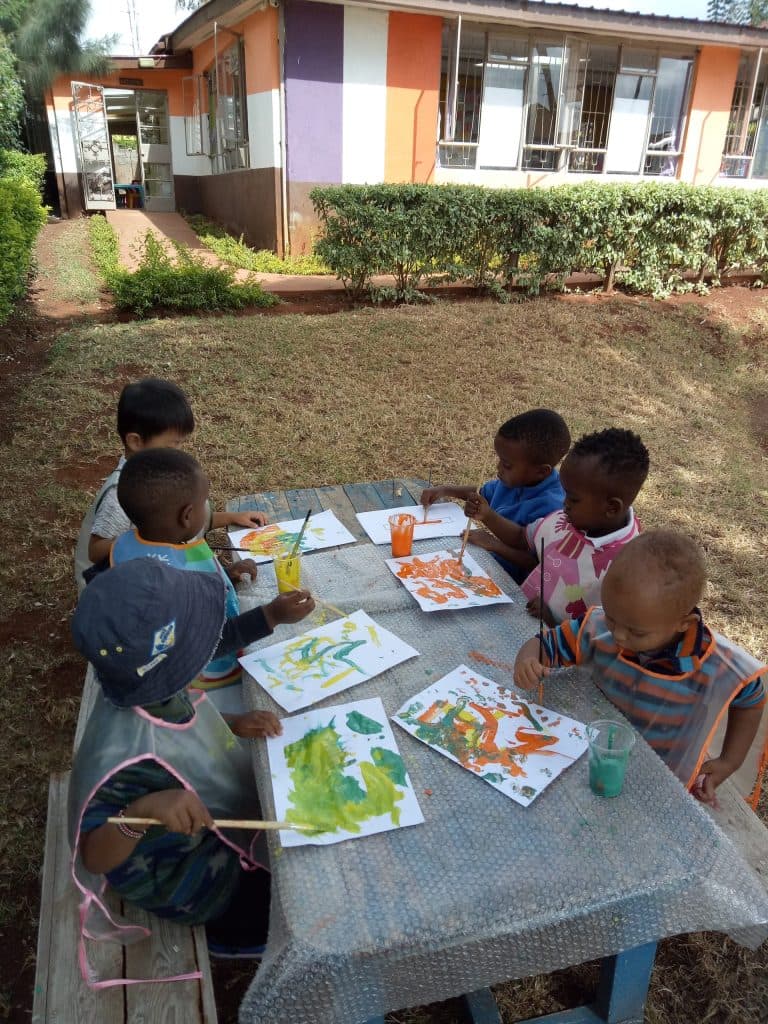
Children painting outdoors at the school

Ages 5 – 6

KG2 / PP2

KG2 is the final year of our kindergarten and the most academic. Our aim is for children to leave us happy, resilient, creative, and sociable — beginning to show the school's values of self-belief and curiosity, and fully ready for the transition to Year 1.

Alongside the final stage of the EYFS framework, a broad co-curricular programme with a strong emphasis on outdoor learning helps instil a robust moral compass, good manners, and an awareness of others.

Additional lessons

  • CRE
  • Elementary Kiswahili
  • STEM
  • Coding & Robotics
  • Art
  • PE

Class sizes

Small classes, closely staffed

Kindergarten classes are kept deliberately small, and every one is staffed by two adults — so each child is carefully known and gently challenged.

  • Under 20

    learners in every class

  • 2

    adults in every class — a main teacher and an assistant

A day with us

What every day includes

Tuition covers far more than lessons. Meals, swimming, books, clubs, and the everyday business of playing well together are all part of the week.

The school dining hall where children take their meals

Nutritious meals

Served at 10:00 am and 12:00 pm, and included in tuition.
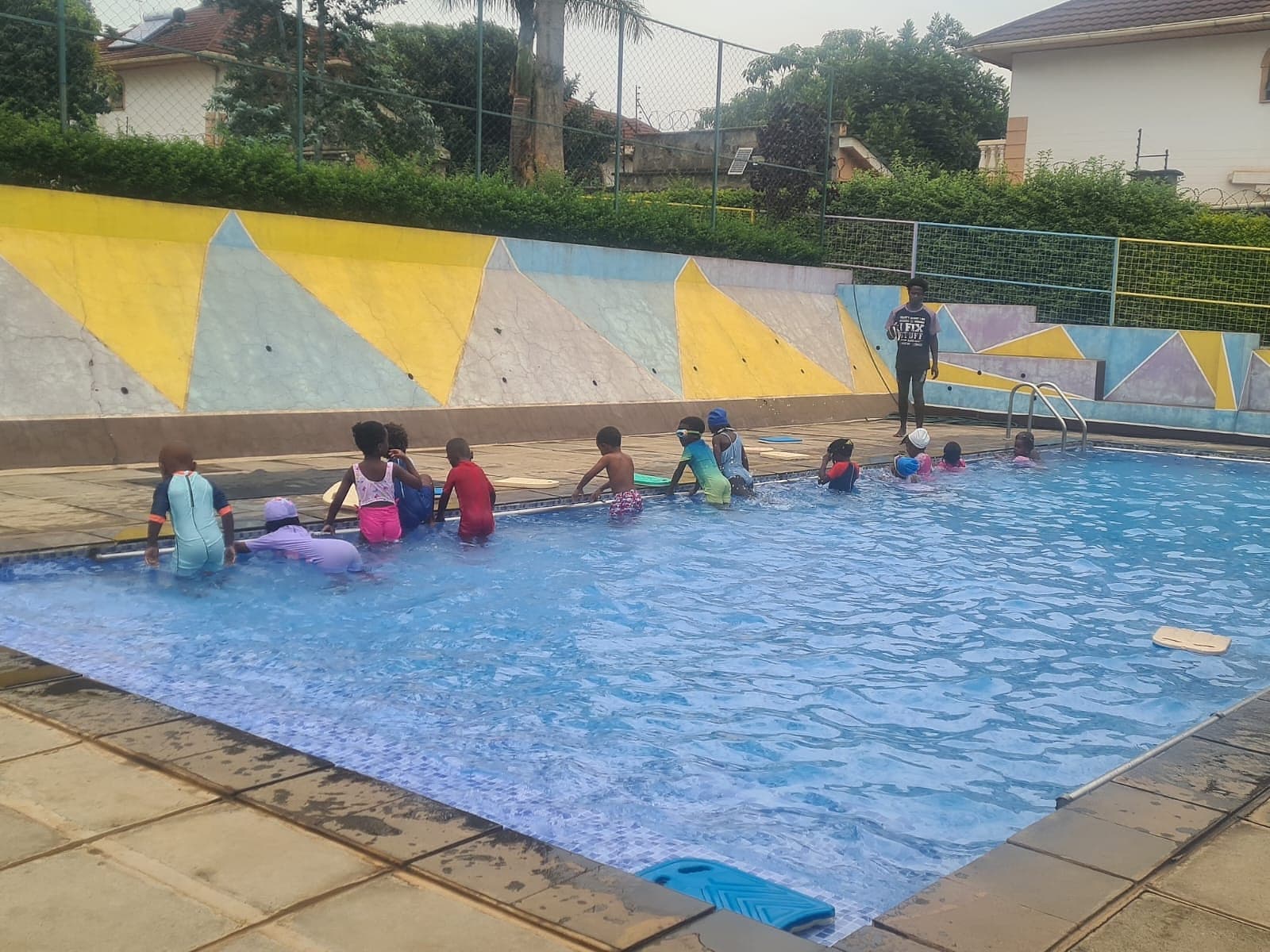
Children at a swimming lesson in the school pool

Swimming lessons

Every child swims, in the school's own under-13 pool.
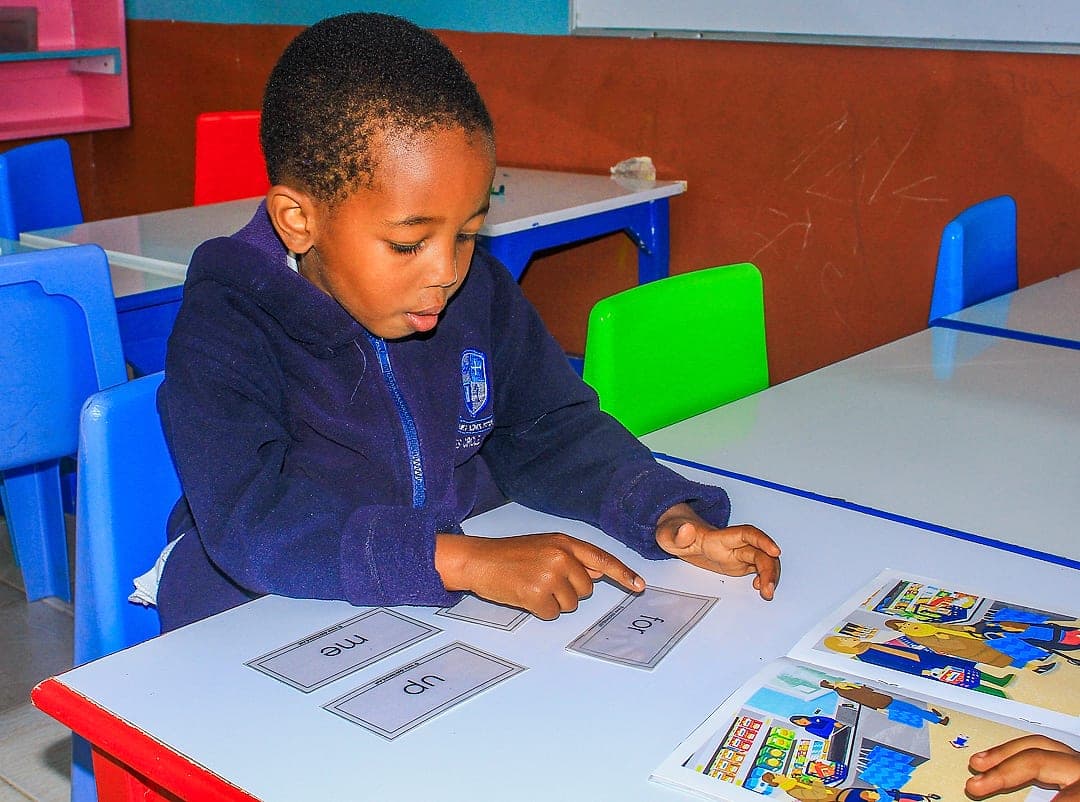
A teacher reading to a small group of children at storytime

Reading and storytime

Reading books are included, and stories are a daily fixture.
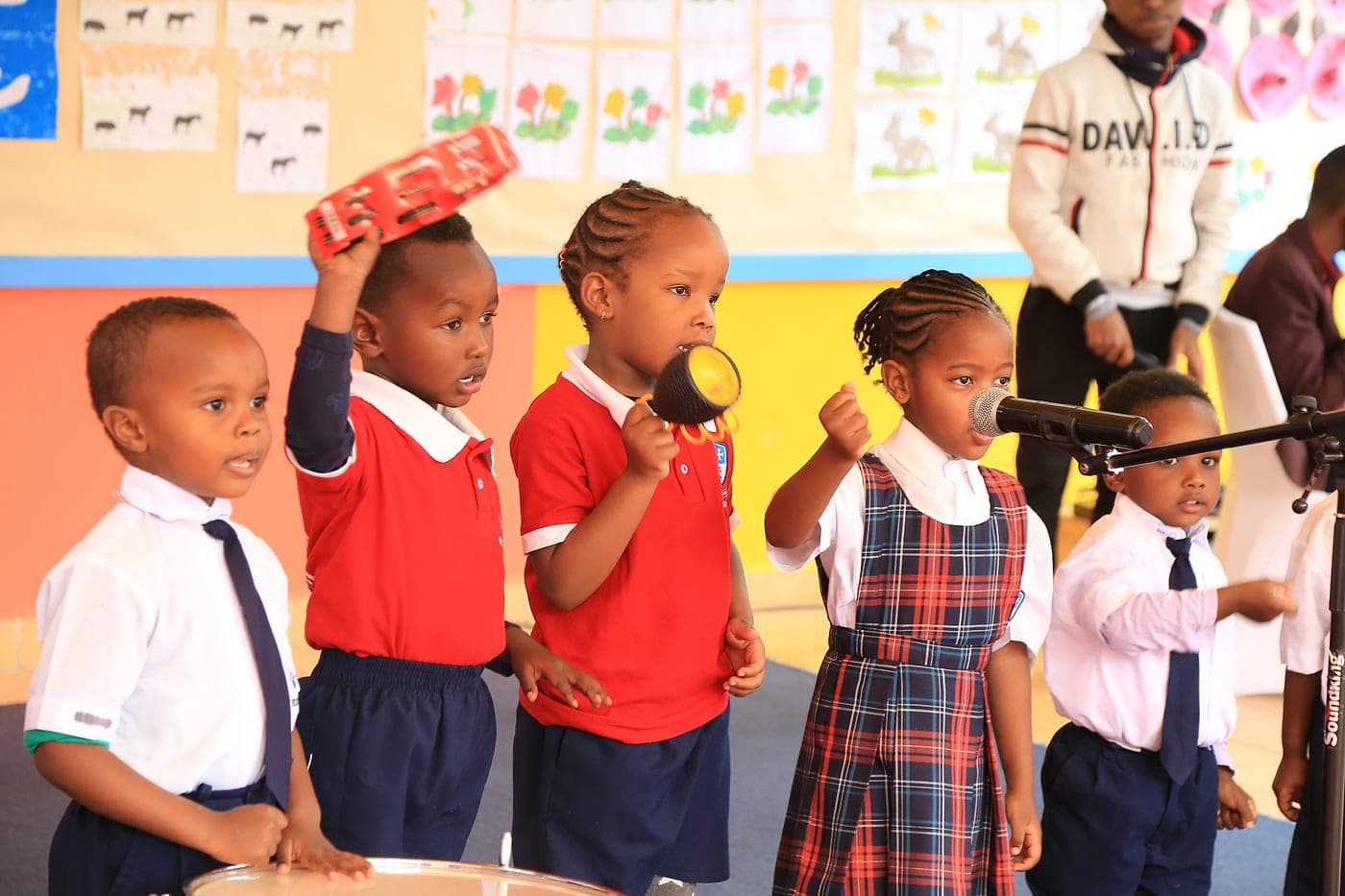
Children playing percussion instruments together at a class performance

Music and drama

Specialist teaching in music and drama, and a stage to use it on.
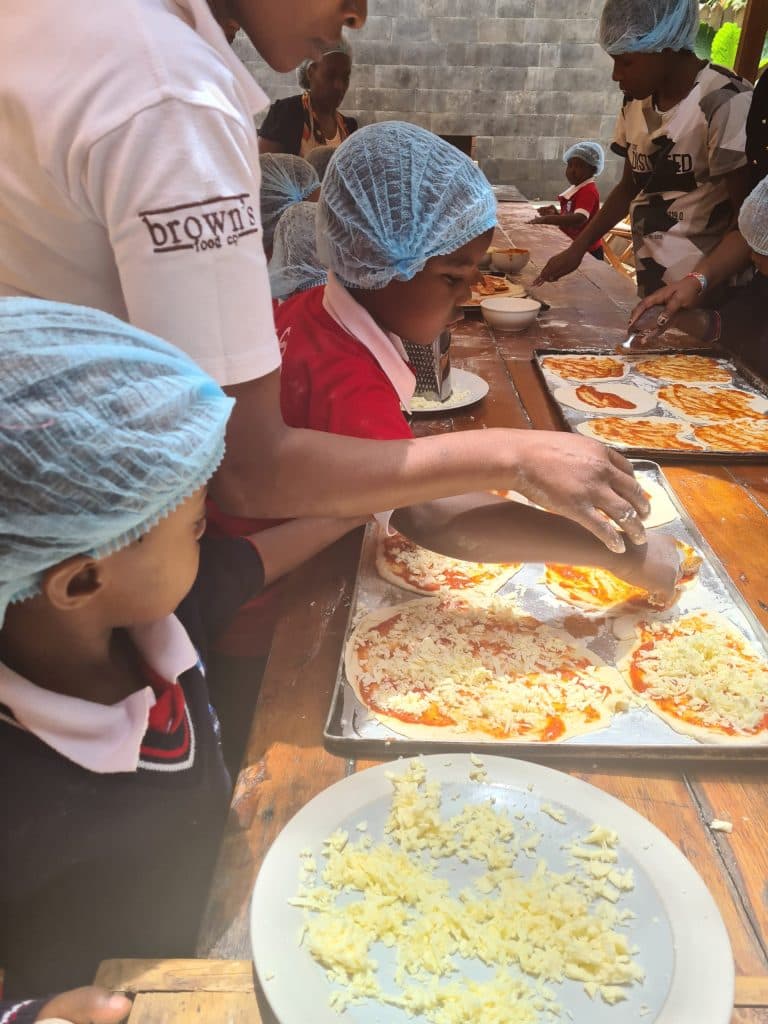
Children taking part in a pizza-making workshop

Educational clubs

Hands-on workshops and clubs, included in tuition.
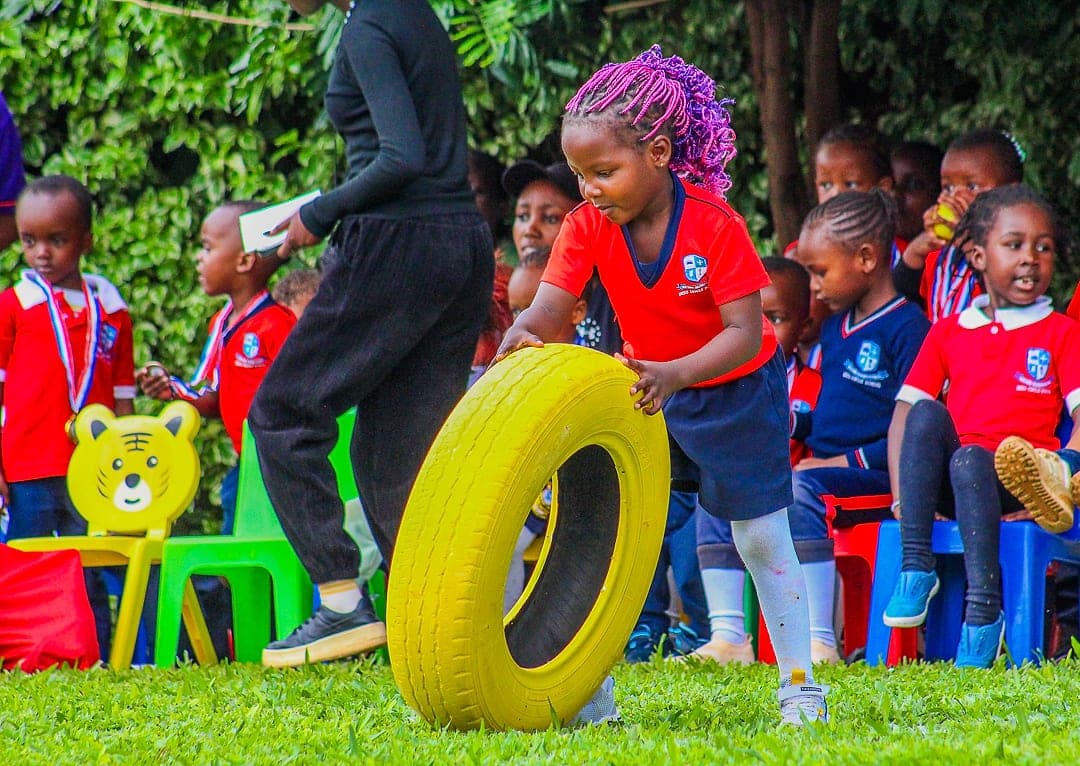
A child rolling a large tyre across the grass on sports day

Outdoor play

The playground and gardens, every day, whatever the weather.

The early years curriculum

The EYFS framework, in detail

The EYFS framework focuses on three prime areas and four specific areas of learning.

Prime areas

Self-regulation / managing feelings and behaviour
We support the children to talk about how they and others show feelings, talk about their own and others' behaviour and its consequences, and know that some behaviour is unacceptable. They are helped to work as part of a group or class and understand and follow the rules. They are encouraged to adjust their behaviour to different situations and take changes of routine in their stride.
Managing Self / self-confidence and self-awareness
We support the children to know the importance for good health, of physical exercise and a healthy diet, and talk about ways to keep healthy and safe. They are trained on how to manage their own basic hygiene and personal needs successfully, including dressing and going to the toilet independently. The children are encouraged to be more confident in trying new activities and say why they like some activities more than others. They are confident to speak in a familiar group, will talk about their ideas, and will choose the resources they need for their chosen activities. They say when they do or don't need help.
Building Relationships
We support the children play co-operatively, taking turns with others. They take account of one another's ideas about how to organise their activity. They show sensitivity to others' needs and feelings, and form positive relationships with adults and other children.
Listening & Attention
The children listen attentively in a range of situations. They listen to stories, accurately anticipating key events and respond to what they hear with relevant comments, questions or actions. They give their attention to what others say and respond appropriately, while engaged in another activity.
Understanding
Children follow instructions involving several ideas or actions. They answer 'how' and 'why' questions about their experiences and in response to stories or events.
Speaking
Children express themselves effectively, showing awareness of listeners' needs. They use past, present and future forms accurately when talking about events that have happened or are to happen in the future. They develop their own narratives and explanations by connecting ideas or events.

By creating games and providing opportunities for play both indoors and outdoors, we support children to develop their core strength, stability, balance, spatial awareness, co-ordination and agility.

Gross Motor Skills
Gross motor skills provide the foundation for developing healthy bodies and social and emotional well-being. When developing and growing their gross motor skills, children are given opportunities to negotiate space and obstacles, they demonstrate strength, balance and coordination and move in different energetic ways.
Fine Motor Skills
Fine motor control and precision helps with hand-eye co-ordination which is later linked to early literacy. When developing their fine motor skills, they are working towards holding a pencil correctly in preparation for writing. They use a range of small tools, including scissors, knives and forks, tweezers and paintbrushes and they begin to show some accuracy when drawing.

Specific areas

Literacy is made up of Comprehension, Word Reading and Writing.

Reading
Children read and understand simple sentences. They use phonic knowledge to decode regular words and read them aloud accurately. They also read some common irregular words. They demonstrate understanding when talking with others about what they have read. We support children in developing an understanding of what has been read to them by retelling stories and sharing ideas about different stories. We teach children to read using Systematic Synthetic Phonics (SSP), where children first learn the 42 sounds of the English language, not letter names. They will then begin to learn how to blend these sounds together and read simple words and phrases.
Writing
Children use their phonic knowledge to write words in ways which match their spoken sounds. They also write some irregular common words. They write simple sentences which can be read by themselves and others. Some words are spelt correctly and others are phonetically plausible. We support children with their writing by encouraging them to be creative and use different materials to build up their fine motor skills; we then begin to write recognisable letters and start to spell words correctly by identifying the sounds in them.

Mathematics is so much more than teaching children how to count. We have a big focus on understanding number where we do not rush the children through their numbers but instead give them opportunities to develop a deep understanding of numbers and what they mean. Mathematics is taught in a way that means something to the child so they have the required, deep rooted foundations and are ready to move on to the Mathematics curriculum.

Numbers
Children count reliably with numbers from one to 20, place them in order and say which number is one more or one less than a given number. Using quantities and objects, they add and subtract two single-digit numbers and count on or back to find the answer. They solve problems, including doubling, halving and sharing.
Shape, Space & Measure
Children use everyday language to talk about size, weight, capacity, position, distance, time and money to compare quantities and objects and to solve problems. They recognise, create and describe patterns. They explore characteristics of everyday objects and shapes and use mathematical language to describe them.

Understanding the world has a focus on exploration and asking questions. We look at events that have happened in the past and present, we delve into different cultures and learn about and celebrate different communities and people and we encourage children to want to know more about these topics. We support them in exploring their environment and they begin to understand similarities and differences between the world around them and contrasting environments.

People & Communities
Children talk about past and present events in their own lives and in the lives of family members. They know that other children don't always enjoy the same things, and are sensitive to this. They know about similarities and differences between themselves and others, and among families, communities and traditions.
The World
Children know about similarities and differences in relation to places, objects, materials and living things. They talk about the features of their own immediate environment and how environments might vary from one another. They make observations of animals and plants and explain why some things occur, and talk about changes.
Technology
Children recognise that a range of technology is used in places such as homes and schools. They select and use technology for particular purposes.

Expressive Arts and Design is very much a part of everything we do. We give children the rich opportunities to create using different materials, we encourage them to be imaginative and expressive in their own ways through art, music and drama and we celebrate everyone's individuality and ideas.

Exploring and Using Media and Materials
Children sing songs, make music and dance, and experiment with ways of changing them. They safely use and explore a variety of materials, tools and techniques, experimenting with colour, design, texture, form and function.
Being Imaginative
Children use what they have learnt about media and materials in original ways, thinking about uses and purposes. They represent their own ideas, thoughts and feelings through design and technology, art, music, dance, role play and stories.

The children also benefit from specialist teaching in some subjects, such as Christian Religious Education (CRE), digital learning, STEM, music and drama.

Come and meet us.

The best way to feel what our kindergarten is like is to visit — watch a class, see the children at play, and meet the teachers who would care for your child.

Book a visit

Need help?

Chat with our admissions team